25 maart 2026
Volatility Returns Amid Escalating Geopolitical Risks
From Calm to Crisis: Gas Market Sentiment Flips in Q1
In our previous market update, we boldly stated that gas markets were on the brink of a new era. But the era that has arrived was not the one that was expected. Many drivers in energy markets have developed positively. Norwegian gas flows at record high, American LNG output rises every year, and renewables have picked up throughout the quarter. Despite this optimistic market narrative, Q1 2026 took an unexpected turn. Instead of entering a period of stability, European gas markets were quickly confronted with renewed stress linked to declining storage levels and concerns over disrupted Qatari LNG flows.
Halfway through January the gas market showed their first signs of stress concerning the European gas storages. Europe had its storages only filled up to 83% going into the winter. These storage levels proved insufficient against several cold spells that rapidly accelerated withdrawals. Spot prices rose sharply from around €28/MWh at the start of January to €40/MWh by 1 February. From there onwards, warmer weather forecasts gradually decreased spot prices back to levels around 30 €/MWh.
Strait of Hormuz closure reignites global energy fears
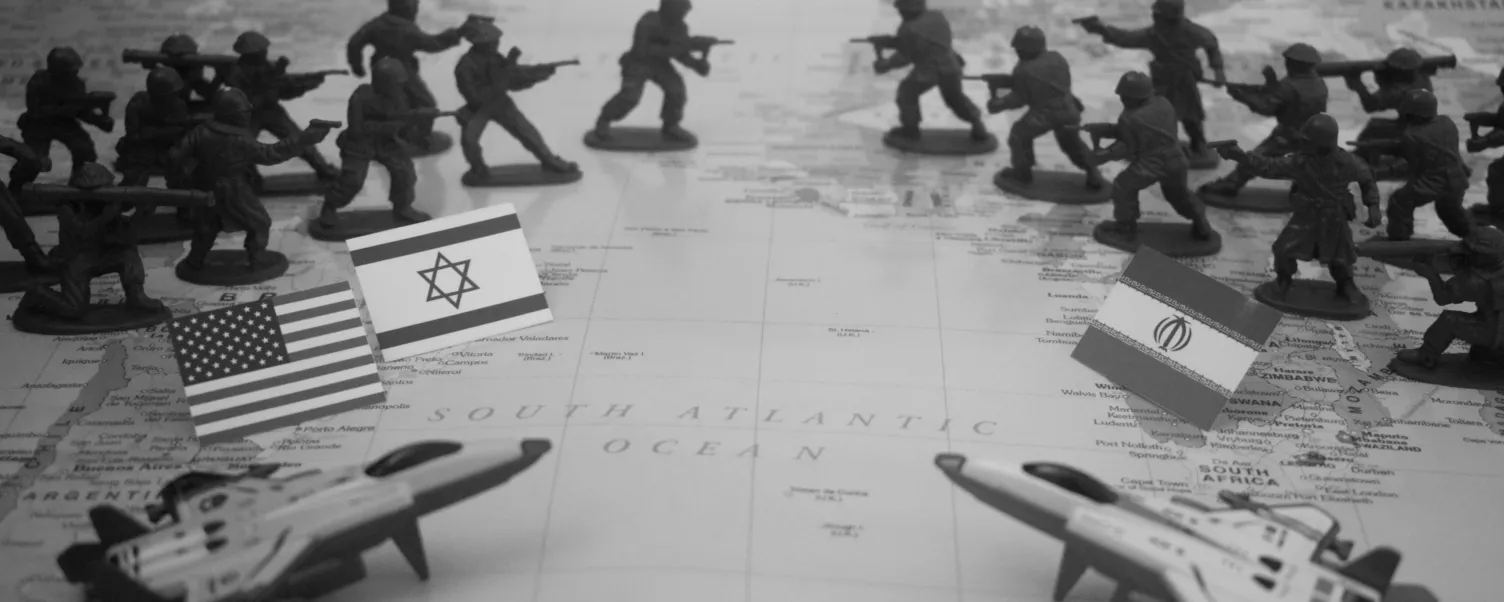
However, instead of stability, even more disruptions hit the market. Short-term volatility intensified dramatically following the launch of Operation Epic Fury, a coordinated US–Israeli strike on Iranian military infrastructure after a major naval buildup in the Gulf of Oman. The attack, which resulted in the death of Iran’s supreme leader, Ayatollah Khamenei, sparked rapid escalation with missiles and drones exchanged across the region, including Iranian strikes on US assets in neighbouring Gulf states.
There have been multiple statements on what the goal of these strikes might be. Installing a new regime, destroying the nuclear programme and military assets of Iran, but also unconditional surrender have been named by Trump as goals of this war. After 3 days Iran declared the Strait of Hormuz closed.
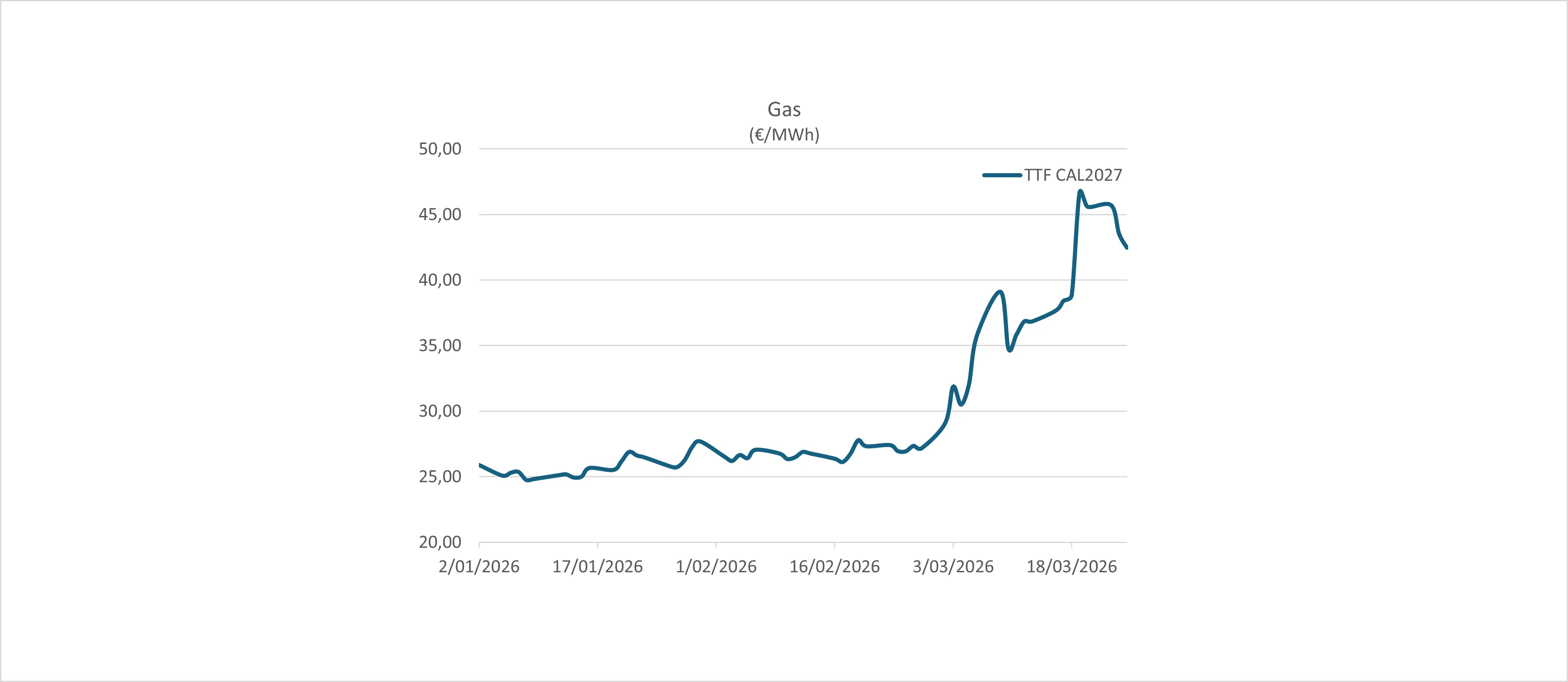
Often described as the world’s most critical energy artery, the strait handles more than 20% of global crude oil and LNG shipments. The conflict meant a direct impact on supply and production of these energy sources. WTI crude surged from around $65/bbl M+1 settlements to $98.71/bbl, with intraday peaks above $110/bbl. TTF spot prices jumped from 31.15 €/MWh on 1 March to 53.71 €/MWh just two days later. While short-dated products experienced the largest shock, longer-term contracts moved more modestly: CAL27 peaked at 46.68 €/MWh, while CAL29 reached 25.20 €/MWh, roughly in line with summer 2025 levels.
The closure of the Strait of Hormuz has created an immediate logistical bottleneck across global energy supply chains. Although Gulf producers retain the ability to extract crude and LNG, they are effectively unable to move these volumes to international markets. A reopening of the strait would likely bring a swift correction in prices, though risk premiums would continue to keep levels above early‑2026 benchmarks. This stands in stark contrast to the far more structural damage that could result from direct attacks on LNG production facilities, an outcome that could push global supply back to 2021 levels and require years to recover. The ultimatum President Trump walked back on on Monday 23 March, underscores how close markets came to such a scenario; a strike on Iranian energy infrastructure would almost certainly have triggered the long‑lasting disruption described above.
Carbon Market Correction Pulls European Power Prices Lower
Belgian forward electricity prices began 2026 with an upward correction after last year’s steep declines caused by lower gas prices. However, by late January, the EU allowances regained its role as the dominant driver of power pricing. Industrial representatives and policymakers convened in the Port of Antwerp to highlight Europe’s competitiveness challenges, particularly the burden of rising ETS costs.
The industry was able to convince quite a few heads of state to join their effort, with German counsellor Friedrich Merz leading the way. The EU commission, chaired by Ursula von der Leyen, proofed more difficult to persuade. The largest revision of ETS is expected to be finalized by mid-2026. A full redesign appears unlikely; instead, the Commission is expected to use existing instruments, such as the Market Stability Reserve and free allowances, to influence EUA pricing.
Gas Price Shock Reverberates Through Power Markets
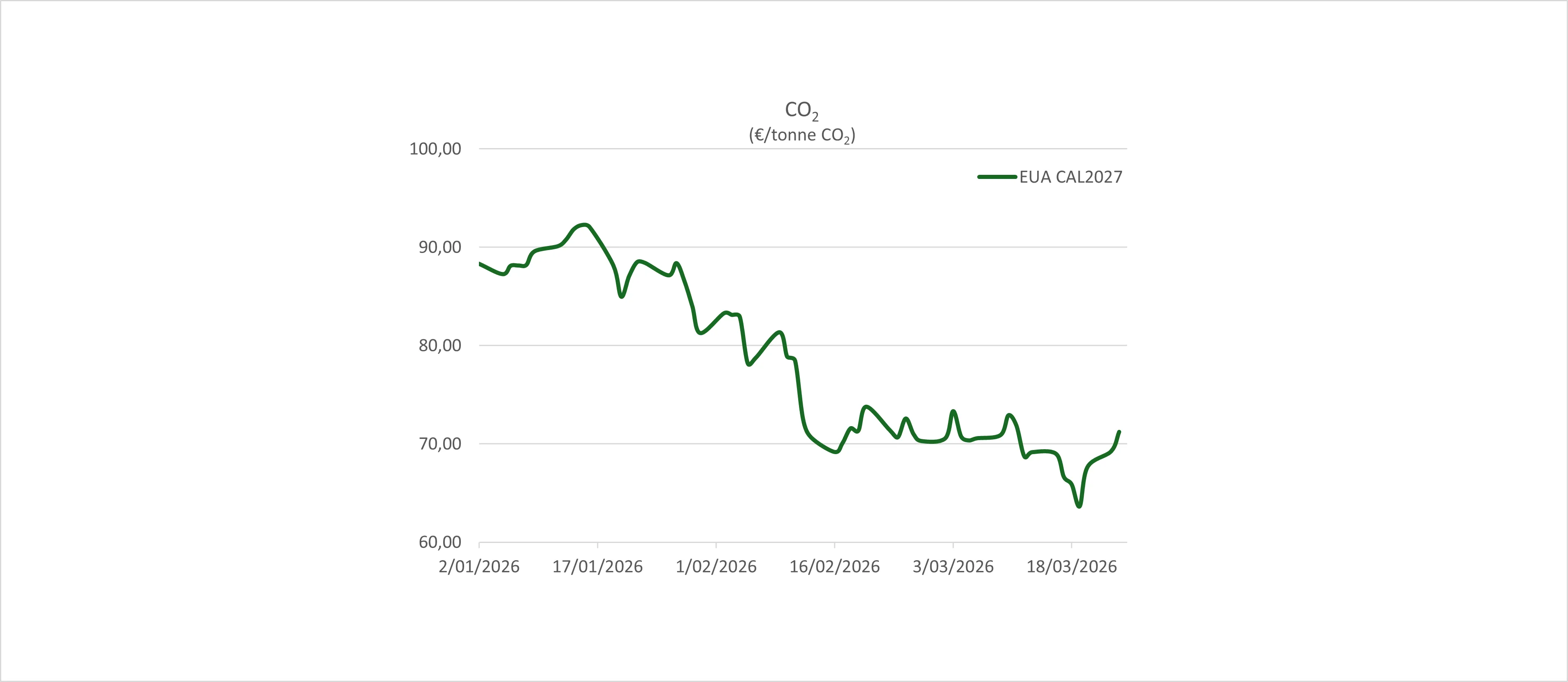
Markets, however, began increasingly pricing in a relaxation. EUA Dec26 fell from a 12month high of 92.24 €/tonne on January 15th to an eleven-month low of 63.65 €/tonne on March 19th . The product had been trading around 70 €/tonne. Forward power prices declined accordingly, with CAL28 and CAL29 dropping below 70 €/MWh. CAL28 reached 65.92 €/MWh, the lowest level since the aftermath of Liberation day in April 2025.
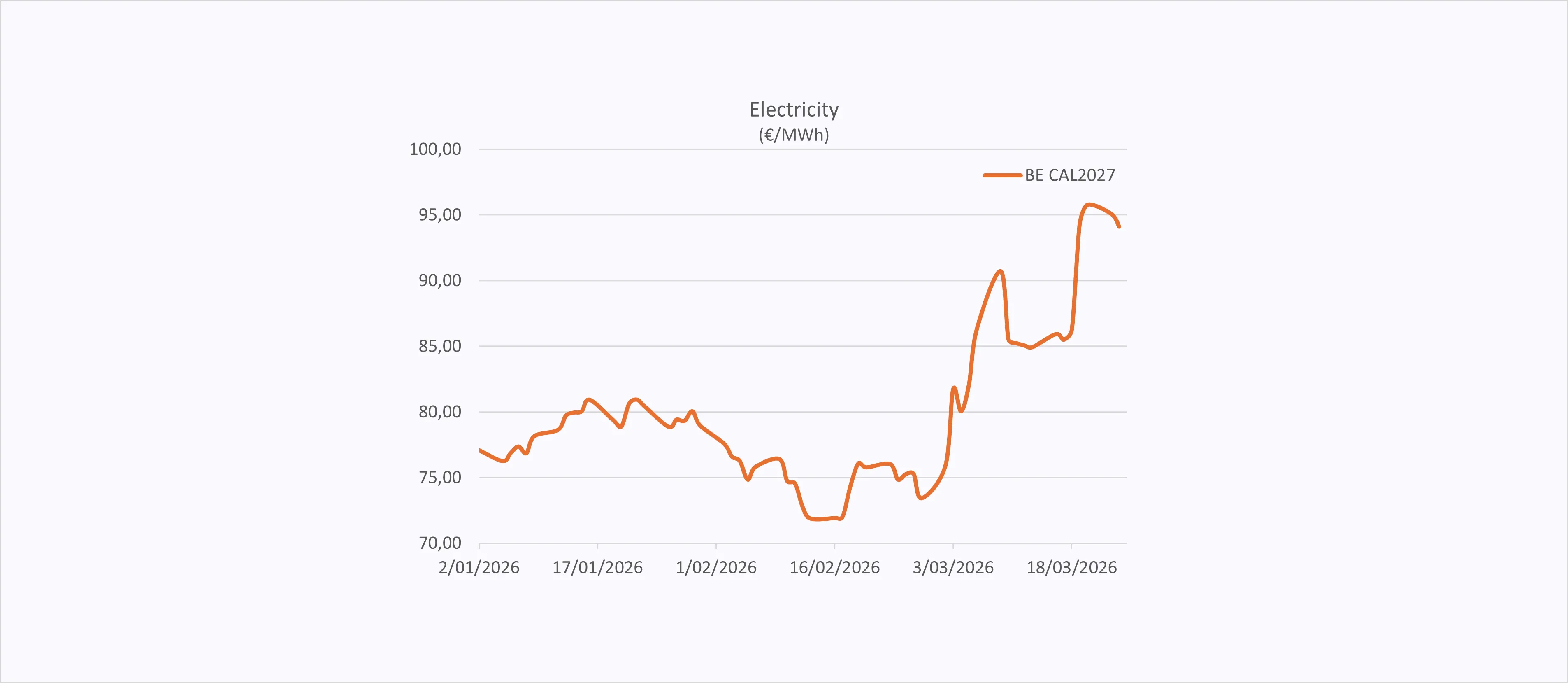
Nonetheless, other drivers gained the upper hand. The massive gas price surge, triggered by the Middle East conflict, also influenced electricity prices. With a slight delay Belgian Power CAL27 which had dipped to 73.42 €/MWh, climbed rapidly to over 90 €/MWh, an increase of more than 20% in just six trading days. Spot markets also experienced significant volatility, with evening peaks exceeding 200 €/MWh since the start of the Iran conflict. While strong renewable output helped contain average spot prices more or less, the widening gap between midday and evening hours became increasingly pronounced.
What’s next? Energy Risk Management Becomes Essential as Volatility Persists
The events of Q1 once again illustrate the extreme unpredictability of global energy markets. Much now depends on what President Trump will ultimately define as ‘victory’ in the conflict. Domestic political pressure, rising fuel prices, or polling data could push him toward a rapid deescalation, yet a determined Iranian regime could equally draw the US into a prolonged confrontation. On the other hand, many fundamentals look positive and could quickly reverse market trends. Visibility remains low. For energy consuming companies, only a well-structured and actively managed hedging strategy can offer meaningful protection.
As consultants, we are fully committed to supporting the optimisation, implementation, and execution of a procurement strategy tailored to your organisation.