25 maart 2026
Legislation News March 2026
Federal and regional governments reach agreement on support for energy-intensive businesses
The federal government initially reserved 944 million euros to support energy‑intensive companies with their electricity costs, combining a CISAF‑based subsidy with a reduction of transmission grid tariffs. The budget foresees 644 million euros, supplemented by an additional 300 million euros from Fluxys, although it is still uncertain whether that last component can legally be used to reduce electricity costs.
On 19 February, however, the Council of State ruled that providing subsidies to companies falls under regional jurisdiction, not the federal level. Consequently, the federal and regional governments agreed to split the budget: 55% will be used federally for a tariff‑based measure, while 45% is transferred to the regions to finance CISAF‑based support.
Federally, the proposed measure consists of an 80% reduction in transmission tariffs for Elia‑connected industrial users, with costs spread across other consumers who will be compensated through lower excises. The implementation will require a sequential process in which CREG opens the tariff methodology, Elia proposes new tariffs, and CREG grants final approval, taking an estimated 6 to 12 months, or possibly being deferred to the 2028–2031 tariff period.
Regionally, CISAF funding will come via a “burden‑sharing” mechanism based on ETS income, but its attractiveness competes with the existing ICL scheme for indirect‑emission‑cost compensation, since support cannot exceed the maximum offered by either mechanism. The ICL might be expanded from 37 to 140 companies, with the original group receiving 80% compensation and the newly added firms 75%, while CISAF would reach a broader group but only for a limited three‑year period. The total CISAF‑related budget amounts to 644 million euros, supplemented by an additional 300 million euros from Fluxys, although it is still uncertain whether that last component can legally be used to reduce electricity costs.

Cuts to subsidies for large solar farms postponed again
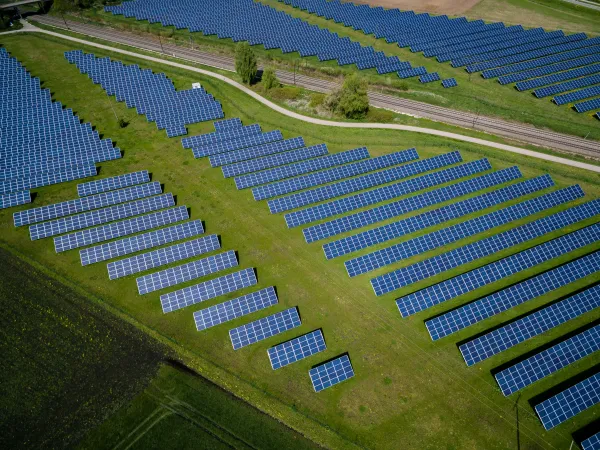
The planned cuts of subsidies for large solar farms has been postponed once again, with the measure now delayed by at least several months. Flemish Energy Minister Hans Bonte insists the reform will still be implemented, but acknowledges that timing issues have forced another deferral. Bonte is withholding the Council of State’s latest advice, raising suspicions even among coalition partners that the opinion may be highly critical. The fact that VEKA has launched a new impact study, suggests that the Council identified gaps in the proposal, delaying any decision until at least the summer.
Coalition agreement in the Netherlands
The coalition agreement sets a strong focus on energy security, affordability, and the acceleration of the energy transition, with grid‑congestion relief as the top priority through tariff incentives, flexibility contracts, energy hubs, and expanded heat networks, including possible public participation in heat companies. The government plans a major push toward electrification of industry, continued investment in CCS/CCU, improved alignment of electricity supply and demand, strengthened interconnection with neighbouring countries, and large‑scale offshore wind deployment reaching 40 GW by 2040 via Contracts for Difference. Renewable‑energy policy will also be reinforced through an extension of the SDE++ scheme, with six new €8 billion tender rounds running through 2032, alongside efforts to scale up green gas and green hydrogen, while granting a transitional role for blue hydrogen, and expanding the Dutch nuclear sector through an SMR programme and at least four new nuclear reactors.
To safeguard electricity‑supply reliability, the agreement includes the creation of a national capacity market and confirms that the Groningen gas field will remain closed, with no new gas extraction licences under the Wadden Sea, though North Sea gas production will continue. For energy‑intensive industry, the government aims to accelerate decarbonisation by abolishing the national CO₂ levy, reducing electricity costs in line with EU competitiveness concerns, and providing indirect‑cost compensation (192–505 M€/year from 2026–2035) as well as a direct electricity‑price support scheme (345–495 M€/year from 2028–2035), while phasing out incentives for fossil fuels and designating strategic industrial‑energy clusters as zones of national importance. Beyond industry, the coalition reaffirms its commitment to achieving climate targets, promoting a circular economy by 2050, expanding EV charging infrastructure, maintaining fiscal incentives for electric driving, coordinating European standards for biofuels with Germany and France, and supporting innovation in negative‑emission technologies. With these broad strategic lines set, the concrete policy design and implementation will become the focus in the coming years.