
19 september 2026
Geopolitical Factors Tighten European Energy Markets
Failed resolution effort leads to gradual re-escalation
The past quarter began with cautious optimism regarding the potential reopening of the Strait of Hormuz. In June, the US and Iran signed a memorandum of understanding that extended the existing ceasefire for an additional 60 days. During this period, both parties negotiated the terms of a possible reopening of the Strait. However, several major contention points remained unresolved, which weakened the prospects for a lasting agreement.
The ceasefire finally collapsed on the 7th of July after the US launched a strike against 80 Iranian targets in response to attacks on commercial vessels transiting the Strait of Hormuz. This triggered approximately two weeks of intensive military exchanges between both sides, effectively ending hopes for a near-term reopening of the Strait. As a result, Brent crude prices surged from 71 USD/bbl (1st of July) up to 100 USD/bbl in 3 weeks’ time. By the end of the month, the conflict had expanded geographically to the Red Sea, where Yemen's Houthi rebels, allies of the Iranian regime, launched attacks against Saudi vessels transiting the region.
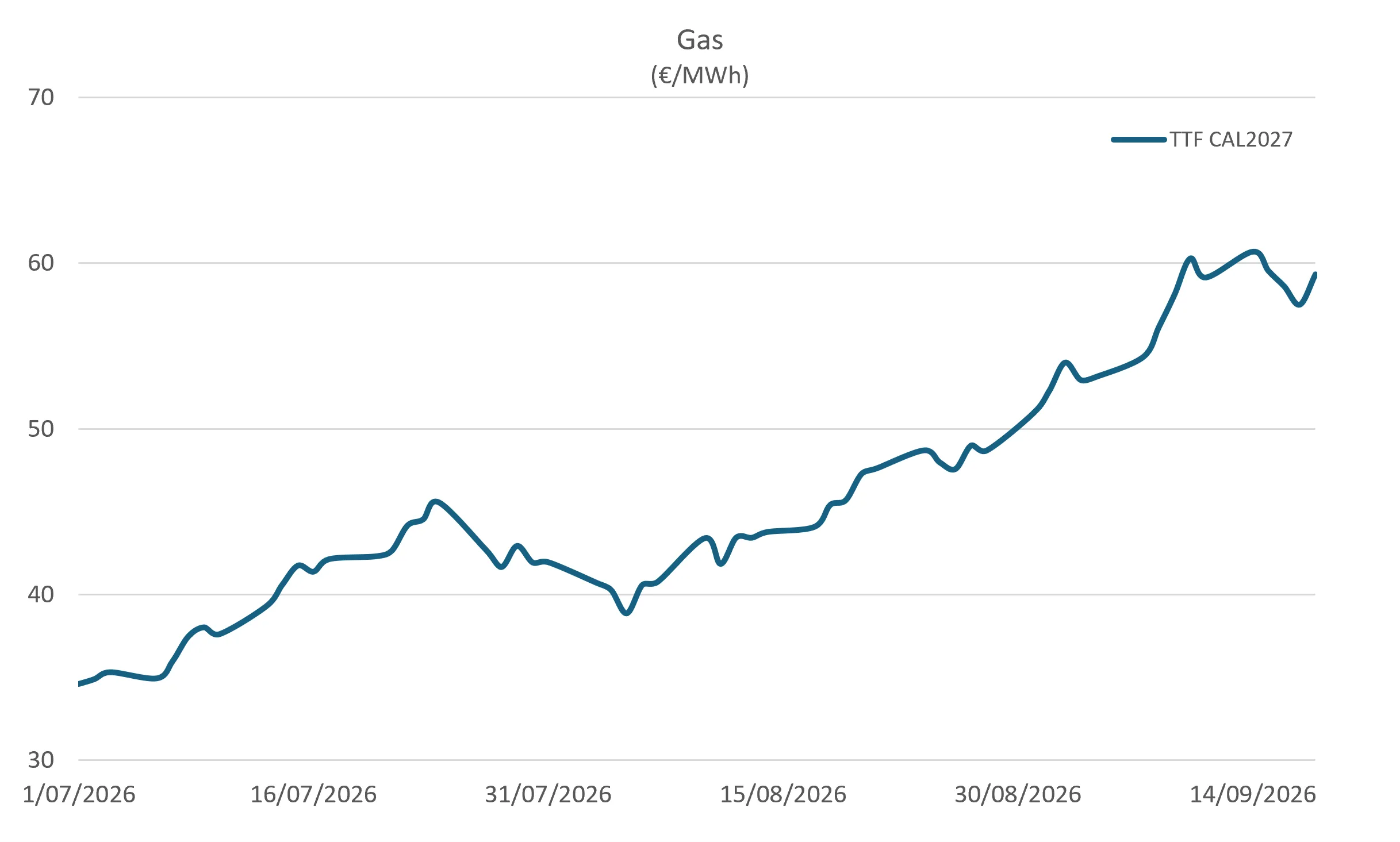
Following the renewed escalation and the failure of diplomatic efforts to end the conflict, gas prices continued to rise steadily, moving from 43 EUR/MWh (1st of July) to 63 EUR/MWh over the same time span. The situation evolved into a so-called "no war, no peace" scenario, in which direct military confrontations became less frequent, but no meaningful progress was made in peace negotiations. The interruption of the attacks provided temporary relief to the gas market, causing TTF spot prices to decline to 52 EUR/MWh by the 6th of August.
After hopes for a rapid collapse of the Iranian regime faded, the US administration shifted its focus during August towards strengthening economic pressure. At the end of August, the US announced stricter enforcement of the trade embargo on Iran, targeting a network of entities and individuals accused of helping the Iranian regime circumvent existing sanctions. This resulted in a sustained increase in European gas prices, with TTF spot prices reaching 66 EUR/MWh by the end of August.
At the beginning of September, after several weeks without direct military confrontation, the US targeted an Iranian vessel suspected of deploying naval mines in the Strait of Hormuz. The incident led to retaliatory attacks by both sides on oil tankers and marked the most significant escalation involving commercial shipping since the beginning of the conflict. After this escalation, TTF spot prices surged from 66 EUR/MWh to 84 EUR/MWh within just two weeks, reaching their highest level since the start of the conflict. Since then, prices partially retraced, declining back to 72 EUR/MWh.
High prices and Asian competition weigh on gas storage replenishment
Since the start of the conflict, the JKM Index, the Asian LNG benchmark price index, has risen faster than the European TTF Index. This causes a larger share of available US LNG cargoes being directed to Asian buyers rather than European buyers. While 62% of US LNG exports were delivered to the EU in June 2025, one year later this share had fallen to 36% in June 2026. The Asian LNG demand rose rapidly during the previous quarter, and continued in July with a modest decline in August (mainly in China and South Korea).
This dynamic of LNG cargos over the summer was reflected in European gas import figures, which declined further compared to 2025 levels and fell below 2024 levels in July. Lower gas imports impact European gas storage injections, with summer injection rates reaching their lowest level in five years. Current gas storage levels stand at 70% of European gas storage capacity, which is 12 percentage points below the level recorded in 2025, increasing the gap of 7 percentage points at the time of the previous quarterly report. Over the past weeks, the rise of the European gas spot prices has allowed European countries to increase LNG-imports, reversing the trend seen at the start of the quarter with the Asian gas prices.
On the supply side, the US remains the dominant LNG supplier. However, the increase in production has not been sufficient to compensate for the lost volumes from Qatar, which has extended its force majeure on LNG exports to Asia and Europe until November 2026. The EU imported record-high volumes of Russian LNG during the first half of 2026, 16% more than during the same period in 2025. From 1 January 2027, the EU is expected to completely phase out Russian LNG from its supply mix.
EU Maintains the ETS framework and strengthens the reinvestment of ETS revenues
In July, the EU published its long-awaited revision of the EU Emissions Trading System (EU ETS), aimed at contributing to the economic investments, resilience and competitiveness of the Union while delivering on the economy-wide 2040 climate target.
The review of the EU ETS seeks to provide relief to energy-intensive industries while preserving the system's role in driving the climate and energy transition. The most significant amendments introduced as part of the reform are a prolonged availability of the EUA’s, strengthening requirements on the ETS revenues utilization (with a focus on the reinvesting the ETS revenues in decarbonizing the ETS sector), investment based free-allocation, and the easing of the Market Stability Reserve.
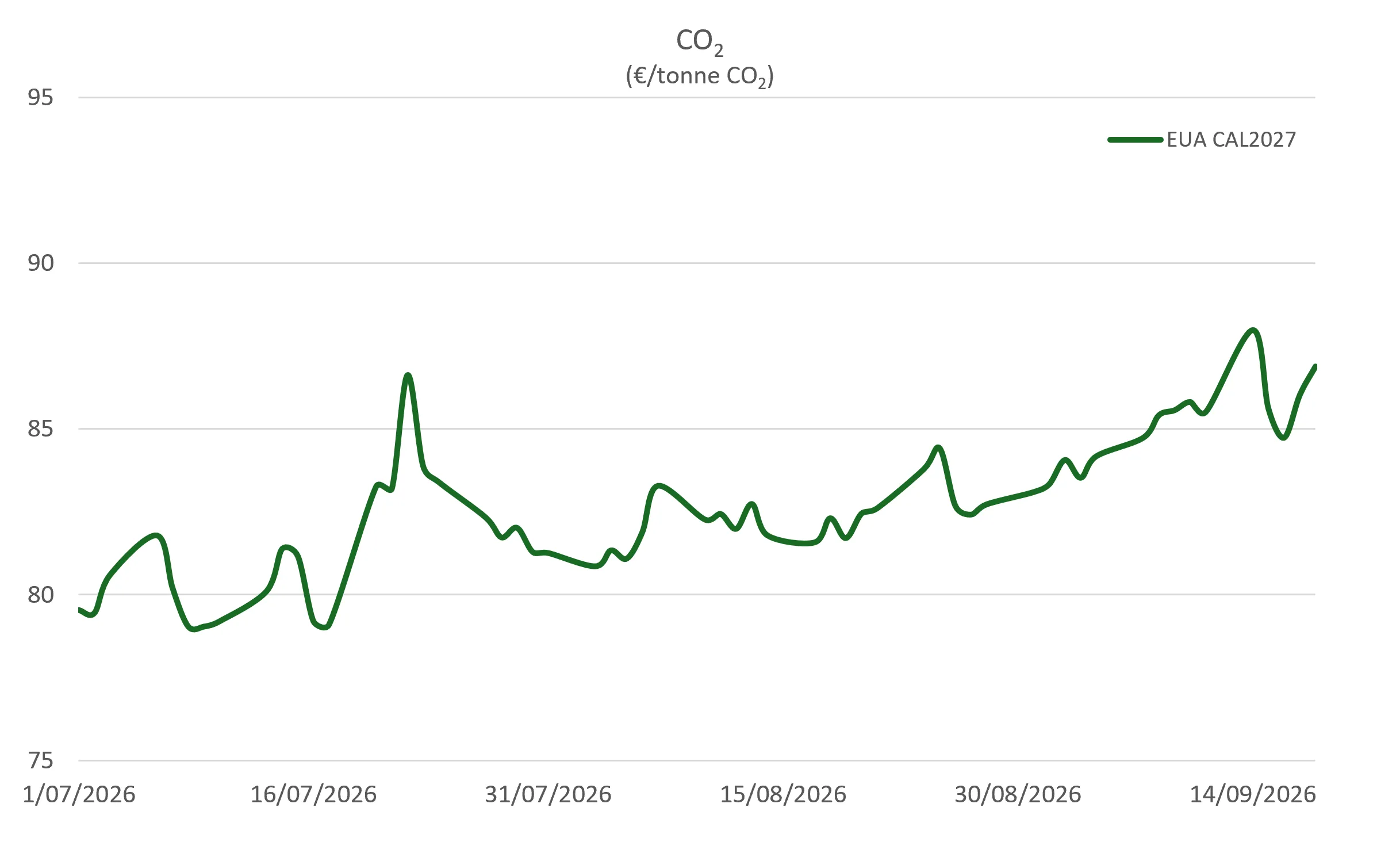
As for the EUA market, the summer period was characterized by relatively low trading volumes. The ETS reforms triggered a temporary increase in EUA prices, which rose from 78 EUR/tonne on 17th of July to 85 EUR/tonne on 22nd of July. Following this short-lived increase, prices decreased to 81 EUR/tonne and are gradually creeping upward supported by higher summer temperatures and more emissions from electricity production generated by more coal-fired power plants.
Successive heat waves drive European power prices higher
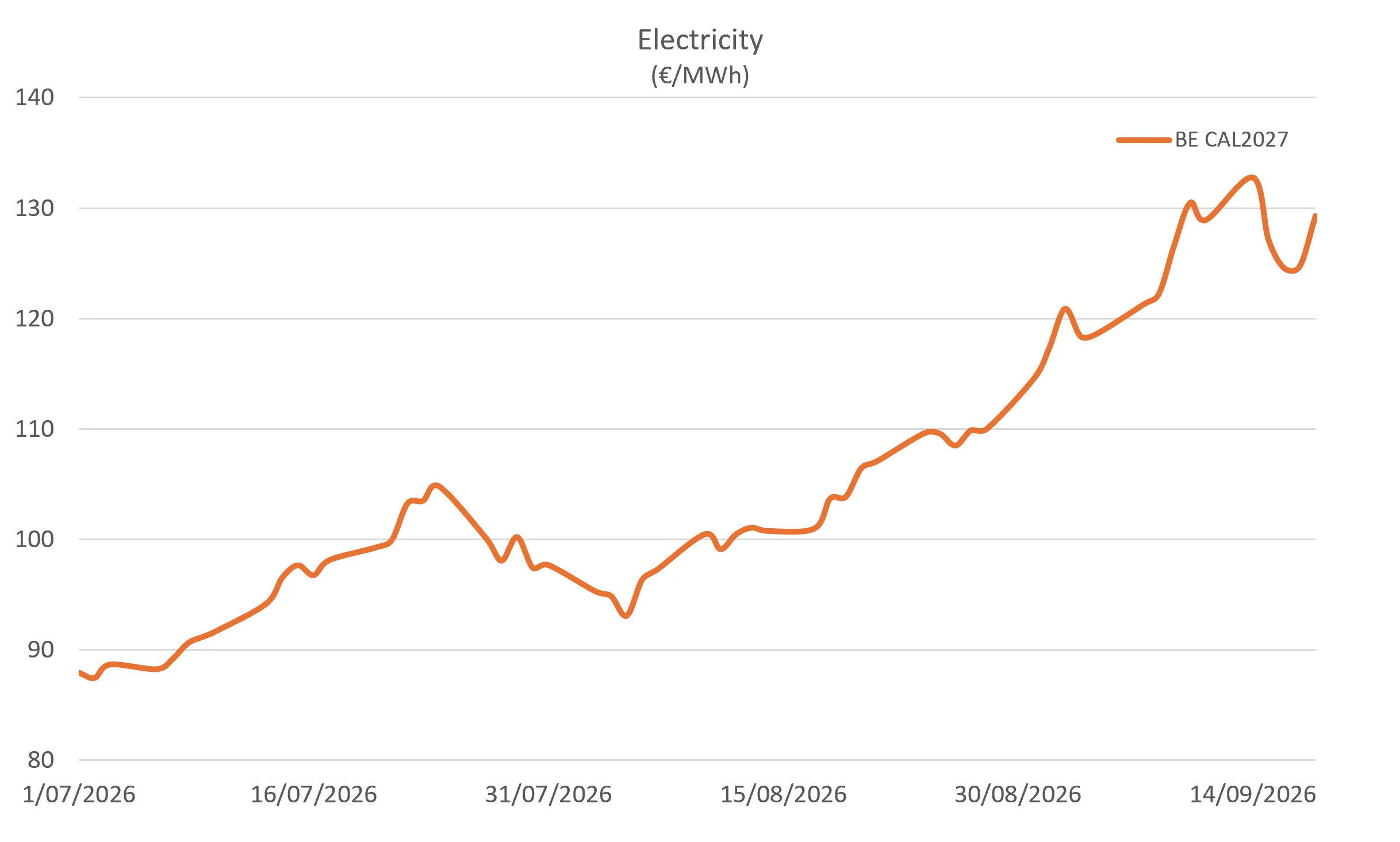
Besides the upward pressure from gas prices, other drivers in the power market also contributed to higher electricity prices. The successive heat waves triggered a series of events that reinforced the bullish gas market dynamics and pushed power prices even higher, resulting in average spot price of 129 EUR/MWh in August.
Power demand in Europe rose to its highest level in the last three years. Cooling demand, driven by the heat waves, increased significantly, leading to particularly high electricity consumption during the evening hours. This resulted in extreme price spikes during evening peak hours. Although renewable generation remained strong, with solar PV output reaching high levels and wind generation remaining broadly in line with 2025, the key source of pressure was the increased reliance on gas- and coal-fired generation at a time of elevated gas prices.
In Belgium, nuclear generation continues to be affected by maintenance activities related to the lifetime extensions of the Doel 4 and Tihange 3 reactors (until the 31st of October). This resulted in the temporary loss of approximately 2 GW of baseload generation capacity, which had to be replaced primarily by gas-fired power plants.
Net electricity imports also declined due to the curtailment of nuclear capacity in France. The successive heat waves led to high river water temperatures and low water levels in major rivers, including the Garonne, the Rhône, and the Meuse, which play a critical role in the cooling of nuclear reactors. As a result, a significant share of French nuclear capacity had to be curtailed for operational and safety reasons. In August, French nuclear output averaged 56% of installed capacity, with curtailments peaking at 8,8 GW. While production reached its highest level in five years during the first part of 2026, it fell to its five-year moving average, losing 15% of its capacity within two weeks.

What’s Next? Gas storage deficit raises concerns for the coming winter
Looking ahead, European energy markets continue to exhibit a bullish trend. Given the failure of diplomatic efforts to resolve the conflict in the Middle East and the recent escalation of tensions, a short-term resolution appears increasingly unlikely.
Current European gas storage levels could pose a significant challenge during the upcoming winter season, with implications for both gas and electricity prices. The gradual restart of nuclear generation capacity could provide some relief during periods of peak evening electricity demand.
Looking further ahead, the expected increase in global LNG liquefaction capacity should help offset the loss of Middle Eastern supply volumes during the second half of 2027. Don’t miss our webinar on this topic on 21 October. Nevertheless, the events of recent months and the elevated summer price levels have highlighted the importance of a well-managed hedging strategy as an essential tool for protecting against market volatility.