24 juni 2026
Energy News June 2026
The Belgian state and Engie entered into exclusive negotiations for the acquisition of Engie's nuclear activities by Belgium
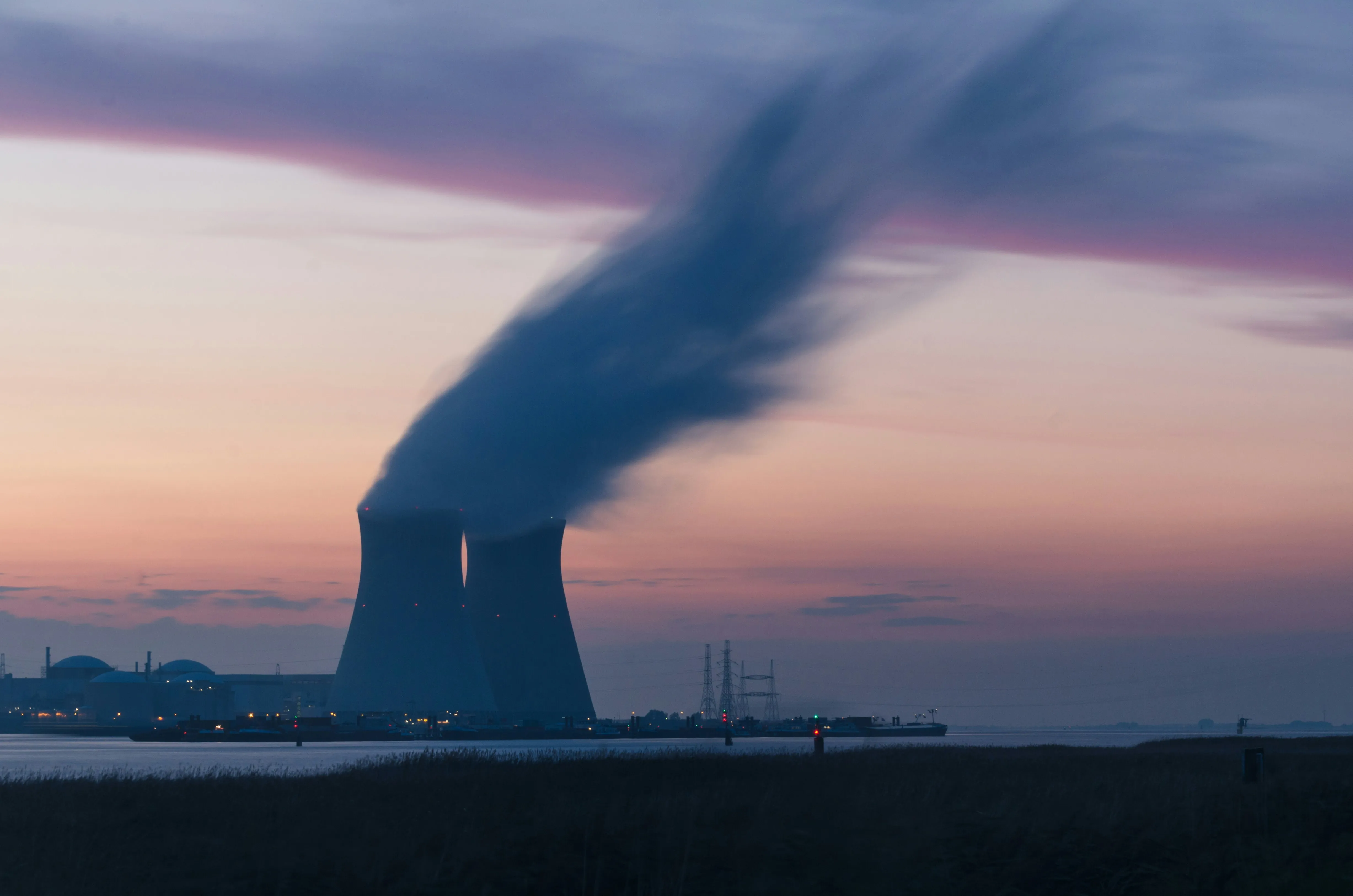
In April 2026, the Belgian State and Engie signed a Letter of Intent to enter exclusive negotiations for the possible acquisition of Engie’s nuclear activities in Belgium. The proposed deal covers the entire nuclear fleet of seven reactors, associated staff, subsidiaries, and all assets and liabilities, including decommissioning obligations.
This marks a major shift in Belgian energy policy, effectively reversing the long-standing nuclear phase‑out strategy and moving toward state ownership of strategic assets. The government’s objective is to secure long‑term energy supply, low‑carbon generation, and industrial competitiveness.
The negotiations include a full due diligence process, with a target to reach key terms by October 2026, while decommissioning activities have been temporarily suspended. Minister Desquesnes, Walloon Minister for Spatial Planning, has banned Engie from demolishing the cooling towers at Tihange 1 and 2.
The deal is seen as both strategically important and financially risky, reflecting a trade‑off between sovereignty and long‑term liabilities.
Minister Bihet proposed a revised and more cost‑efficient approach for the Princess Elisabeth energy island
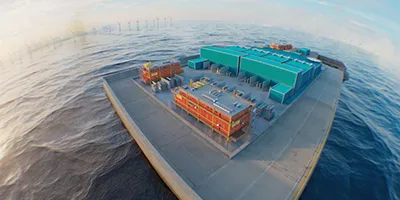
The Princess Elisabeth energy island is undergoing a fundamental redesign after an escalation in costs forced the government to reconsider its ambitions. Initially budgeted at roughly €2,2 billion, the project’s estimated price ballooned to €7 billion, largely driven by the soaring expense of high‑voltage direct current (HVDC) infrastructure.
Energy Minister Mathieu Bihet has proposed a more affordable approach, including scrapping the costly direct current (DC) component, saving at least €3 billion. The revised plan keeps the core island and alternating current (AC) connections to offshore wind farms, while scaling down international links such as the UK interconnector with reduced capacity (from 1,4 GW to around 1,2 GW) and subject to further negotiations over cost sharing.
The project’s timeline has also been impacted, with delays affecting both infrastructure development and associated offshore wind tenders. Looking ahead, the government intends to adopt a phased approach, beginning with the core island and grid connections, while leaving more complex interconnection projects for a later stage once economic conditions improve. The federal government aims to balance its offshore wind ambitions with tighter cost control and reduced impact on consumers.
Discovery of white hydrogen in France/Belgium
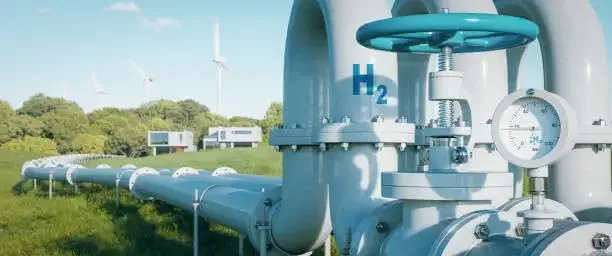
A major discovery of natural (“white”) hydrogen has recently been made in northeastern France, in the Lorraine mining basin near Folschviller and Pontpierre, close to the Belgian border. The reservoir lies deep underground, at depths of up to 3.600–3.700 metres, under high pressure and temperature conditions.
Estimates suggest a very large resource, ranging from 34 to 46 million tonnes of hydrogen, making it potentially the largest deposit globally. Geologists believe the reservoir may extend across borders into Belgium, Luxembourg and Germany.
Despite its promise, several technical challenges remain. Extracting hydrogen at such depths is complex, requiring advanced drilling and gas separation technologies. There are also uncertainties about the actual size, flow rates, and long-term behaviour of the reservoir, as current estimates are still preliminary.
The project is still in an early phase. Ongoing exploration, testing and pilot studies are expected to take several years before any commercial decision is possible. The Belgian federal government launched a national exploration initiative of €1,5 million initially, designed to determine whether economically viable natural hydrogen resources exist in the Belgian subsoil. The exploration strategy follows a two-stage approach with first a detailed geological mapping and modelling to identify promising zones, and second field measurements and potential test drilling if results are positive.
While the discovery could be transformative for Europe’s energy system, commercial production is unlikely before the late 2020s or early 2030s, depending on technical and regulatory progress.