
24 juni 2026
Energy Markets Under Structural Strain
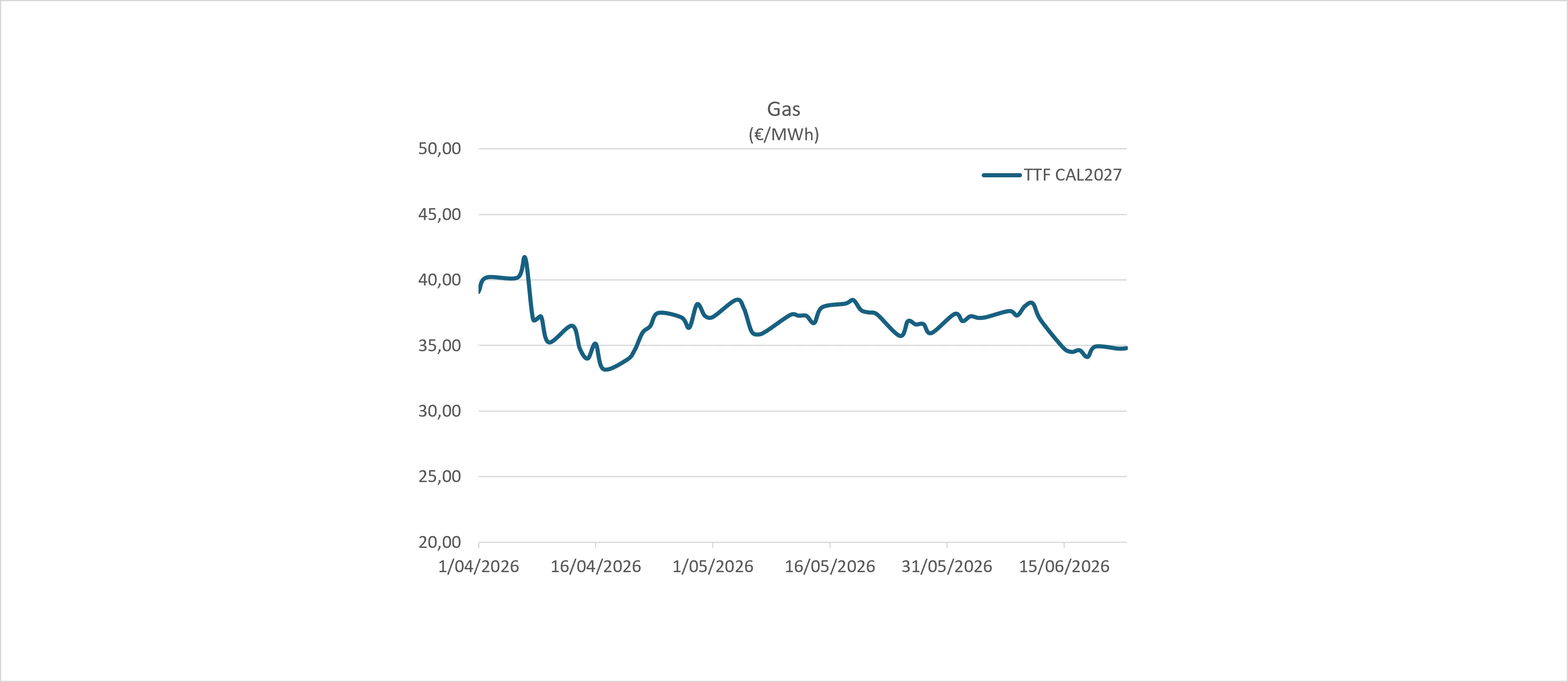
Gas & LNG: A market under structural pressure
Global gas markets confirmed a new structural reality in Q2, and the Middle East conflict made an already tight picture significantly more complex. Coming into the year, markets had been pricing in a wave of new LNG supply from the US and Qatar expected to ease European gas costs from 2026 onwards.
China and India significantly increased LNG imports (mainly from the US Gulf Cost and West Africa) compared to Q1, driven by industrial recovery and heat-driven power demand. This left fewer spot cargoes available for Europe, which entered the injection season from a position of structural weakness. European storages started 2026 already below recent norms (sites closed 2025 around 61% full, compared with roughly 72% at the same point the previous year). As of early June, EU storages stood at just 37% (the lowest seasonal level since 2022) with May LNG imports falling due to reduced flows from the Middle East and a temporary dip in US LNG deliveries linked to maintenance cycles and competing demand from Asian buyers.
The US has stepped up as the dominant LNG swing supplier, and new capacity is genuinely coming online in 2026 as planned. However, these additions are not sufficient to offset the loss of Qatari volumes following the Ras Laffan attacks, with repairs estimated to take up to five years. As net result, the supply relief that markets had been counting on, has been neutralised, and volatility will remain elevated until the supply picture clarifies.
Geopolitics: The Middle East shock and its aftermath
Q2 2026 cannot be understood without its geopolitical backdrop. US and Israeli military operations against Iran began on 28 February. By 4 March, Iran had declared the Strait of Hormuz "closed", attacking ships attempting transit and triggering the largest energy price shock since Russia's invasion of Ukraine: Brent surged from $72/bbl to nearly $120/bbl, while TTF jumped from €31/MWh to €54/MWh by end of March, its largest monthly gain since September 2021. The following timeline picks up from there:
- End of March: TTF closes March up more than 70% compared to end of February.
- End of April: Despite the 7-8 April ceasefire, Brent spikes again to an intraday wartime high of $126/bbl before closing at $114/bbl, underlining how fragile the truce remained.
- Mid-June: Following a formal memorandum of understanding between the US and Iran, Strait traffic resumes for the first time in 110 days and Brent falls below $80/bbl, as markets price in a durable de-escalation.
- June (Today): JD Vance's planned trip to Switzerland was postponed on 18 June. On 20 June, following renewed Israeli strikes that killed dozens in eastern and southern Lebanon, Iran announces it is closing the Strait again in retaliation, warning of further measures if the ceasefire is not enforced on all fronts. The US disputes the closure, reporting that traffic continues uninterrupted. Vance ultimately landed in Switzerland on 21 June for talks with the Iranian delegation, focused on the nuclear file and the Lebanon ceasefire, under Pakistani and Qatari mediation. The talks concluded with Iran and the US establishing a line of communication to manage incidents in the Strait and avoid miscommunication for the remainder of the 60-day period, alongside a de-confliction cell involving Lebanon. TTF eased back around 42 EUR/MWh, as markets took the agreement as a sign that the truce was holding, even if it remains fragile.
Carbon: The market is pricing in the future
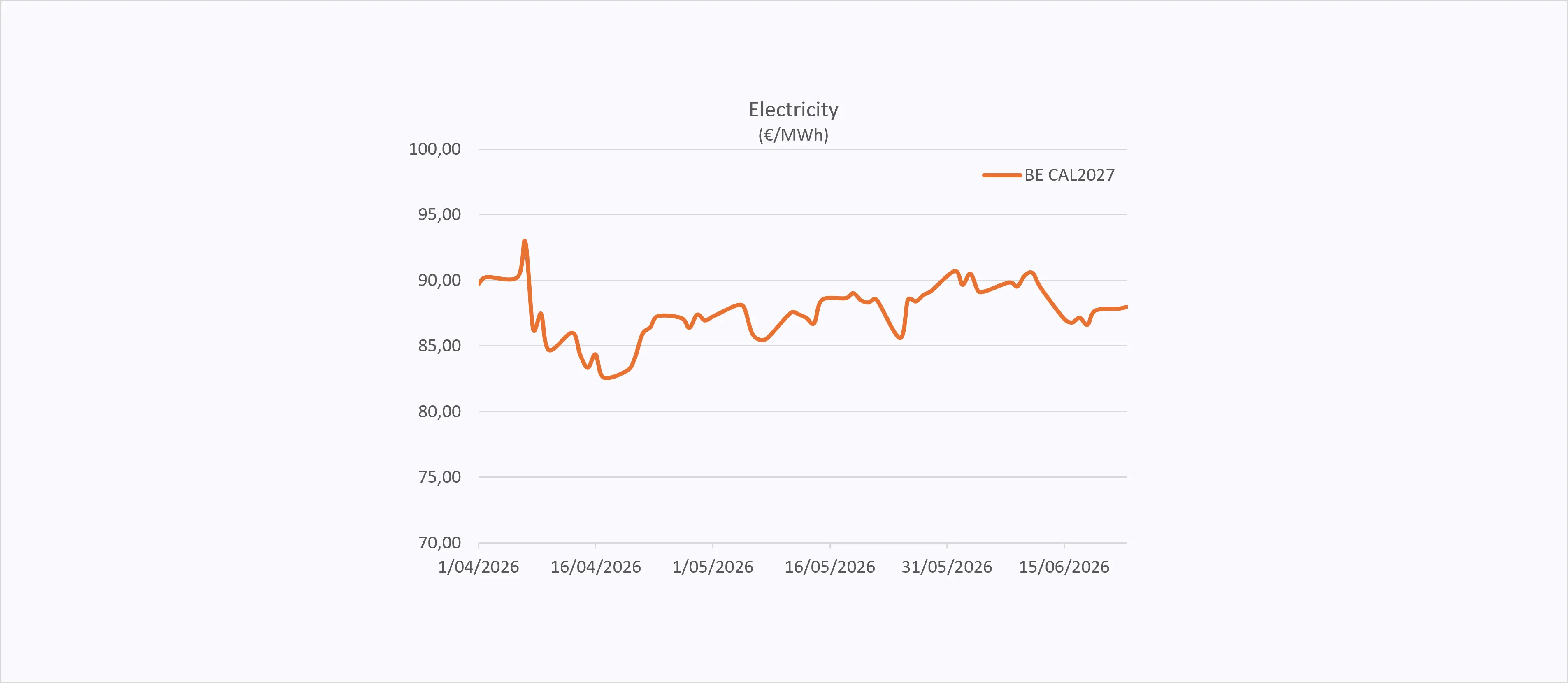
After a period of relative uncertainty, the EU ETS entered Q2 with renewed upward momentum and this time, the drivers are structural rather than speculative.
The publication of proposed, updated EU ETS benchmarks on 11 May set the framework for free allocations covering the 2026–2030 period. On average, industry will continue to receive free allocations covering around 75% of its emissions, with the Commission making use of available legal flexibilities to ease competitive pressure. However, the annual benchmark reduction rates have been tightened and companies that fail to decarbonise fast enough will face growing carbon costs.
The Commission also proposed on 1 April to amend the Market Stability Reserve, specifically by ending the invalidation mechanism that currently cancels allowances once they exceed a certain threshold. Rather than destroying those certificates, they would be kept in reserve to smooth market dynamics and avoid excessive price spikes, ensuring that allowances remain available in the market over a longer period. A broader ETS review with proposals by the European Commission is scheduled for July 2026, which could bring further structural changes by the beginning of 2027.
Electricity: Record solar, volatile prices
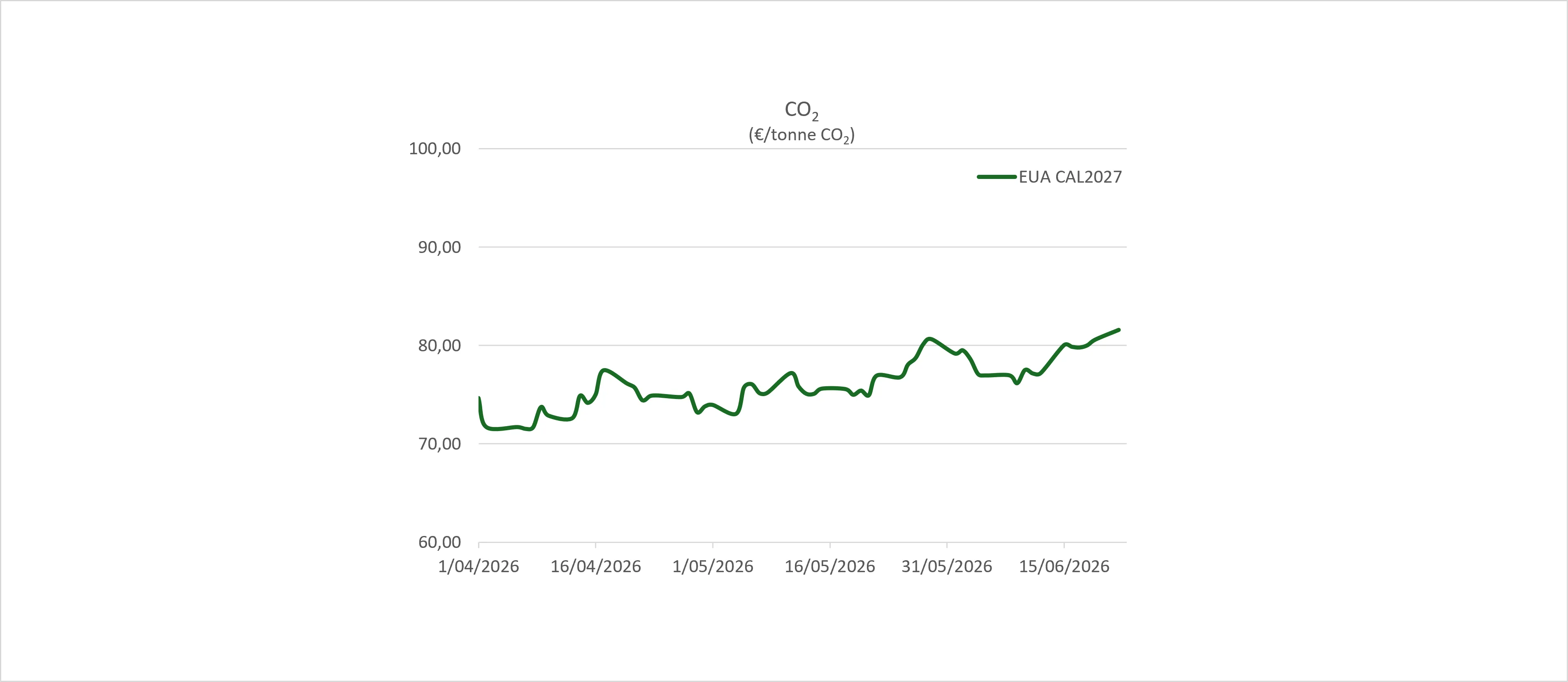
Solar output across Europe hit record levels during the spring months, triggering a sharp increase in both day-ahead and imbalance price volatility. Periods of very low or even negative day-ahead prices during peak solar hours are becoming more frequent, but the most dramatic signal came from Belgium's balancing market: on 6 April, Elia's automatic frequency restoration reserve (aFRR) imbalance price crashed to -€15.000/MWh, driven by excess solar generation and a critical lack of system flexibility. These extreme imbalance price events which were unthinkable just a few years ago are a direct consequence of renewable capacity growing faster than the grid's ability to absorb it, and carry financial consequences for balance responsible parties caught on the wrong side.
The Middle East conflict had a direct impact on European power prices. The cost of gas-fired power across Europe increased by more than 50% following the gas price spike, adding twice as much to electricity costs as the EU carbon price. Price volatility surged particularly in the highly interconnected markets of central and western Europe, with spikes concentrated in the gas-heavy morning and evening hours. Belgium, heavily exposed given its reliance on gas for power generation now the nuclear facilities of Doel 4 and Tihange 3 are under revision for the 10-year lifetime extension, saw wholesale electricity prices reach their highest levels of the year in the first week of March. The contrast with Spain where gas influences electricity pricing in only 15% of hours compared to over 80% in gas-dependent markets illustrates how the same gas shock translates very differently depending on the power mix.
French nuclear availability improved compared to previous years, contributing to greater regional stability. However, the structural bottlenecks that limit the full integration of renewables (grid congestion, slow permitting, insufficient storage) remain firmly in place and are becoming more visible as renewable capacity continues to grow.
What to expect from the next months ?
The outlook for Q3 2026 is one of sustained uncertainty rather than a return to calm. On the gas front, the injection season is running behind: storage entered April at around 28%, below last year's 35%, and reaching the EU's mandatory 80% target by November will require a sustained injection pace that leaves little room for disruption. Spot and destination-flexible LNG cargoes could be further attracted to Asia this summer, making storage filling in Europe more challenging and driving prices up as Europe and Asia compete for the same flexible volumes. Any renewed escalation in the Middle East could trigger another TTF spike. The primary concern for Europe heading into Q3 remains the ability to replenish gas storage ahead of winter, as the conflict continues to tighten global supplies and intensify competition for LNG cargoes.
On the power side, the summer months might bring record solar generation and increasingly frequent negative price hours but also higher demand for cooling and, if the gas market tightens further, upward pressure on electricity prices during low-renewable periods. The EU ETS review planned for July could add a new layer of uncertainty to carbon pricing heading into Q3. In short: volatility is not a temporary feature of today's market, it is the new baseline. For industrial energy buyers, the ability to act quickly, hedge strategically, and adapt procurement to a fast-moving environment has never been more critical.